


SPECIAL SITUATIONS
It takes two to tango
Braskem · September 2026 · Madrid, Spain
Executive Summary
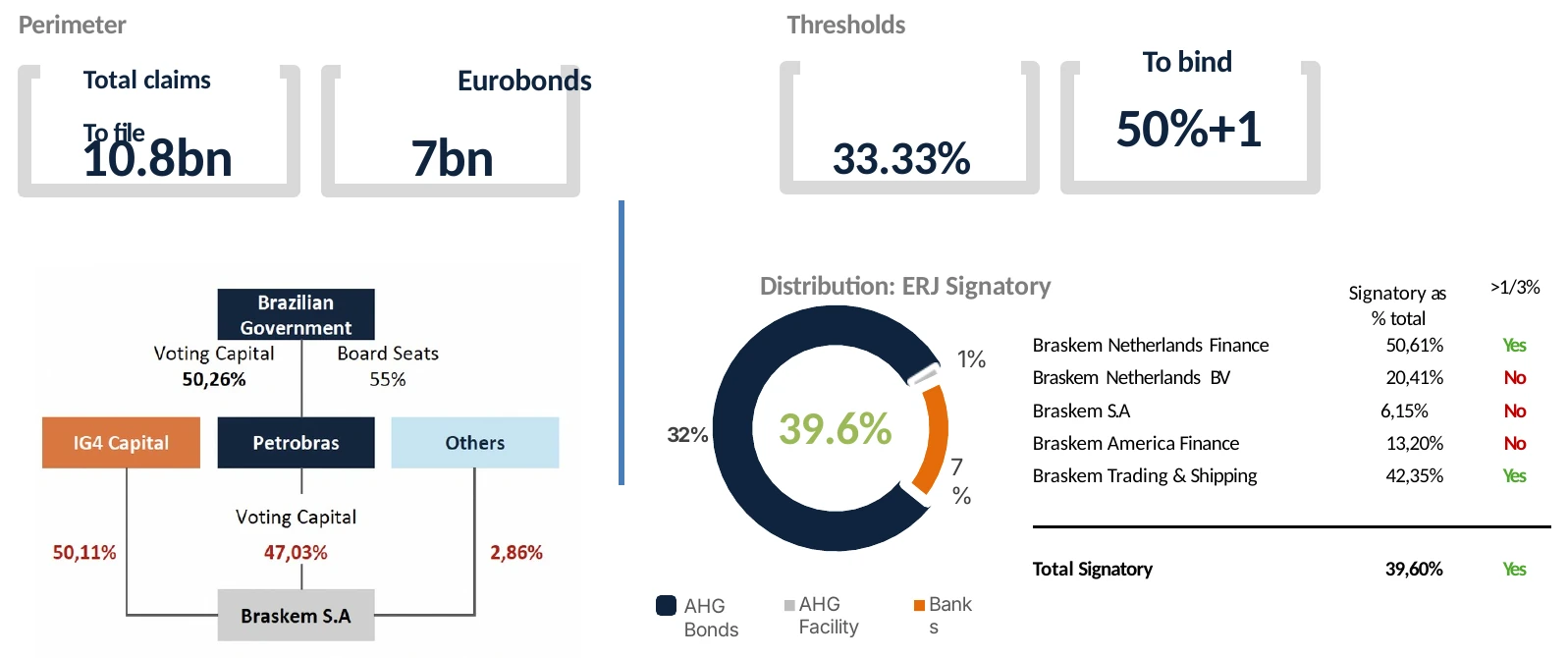
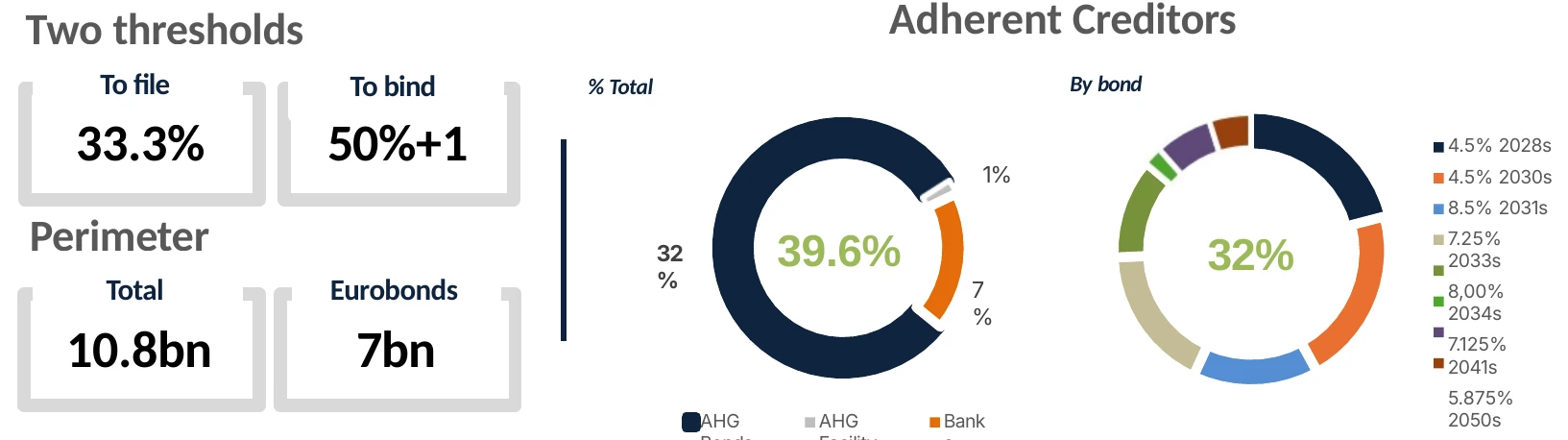
Braskem, the Brazilian petrochemical giant — once a “national champion” — filed for Recuperação Extrajudicial (ERJ) in São Paulo in late August. The filing, structurally similar to a pre-packaged Chapter 11, covers roughly USD 11bn of debt, including USD 7bn in Eurobonds. With 39.6% creditor adherence, the court granted a 90-day stay, shielding the company from legal action while it negotiates with creditors.
In our view, Braskem is a highly event-driven situation — one whose outcome will be decided largely by bondholders and Petrobras, its anchor shareholder.
What’s at stake: Out-of-court restructuring
How we got here
Petrochemical’s cycle downturn
New PE/PP capacity met weak demand; spreads hit multi-year lows. Naphtha-based and high-cost, Braskem’s margins turned negative.
Braskem’s legacy liabilities
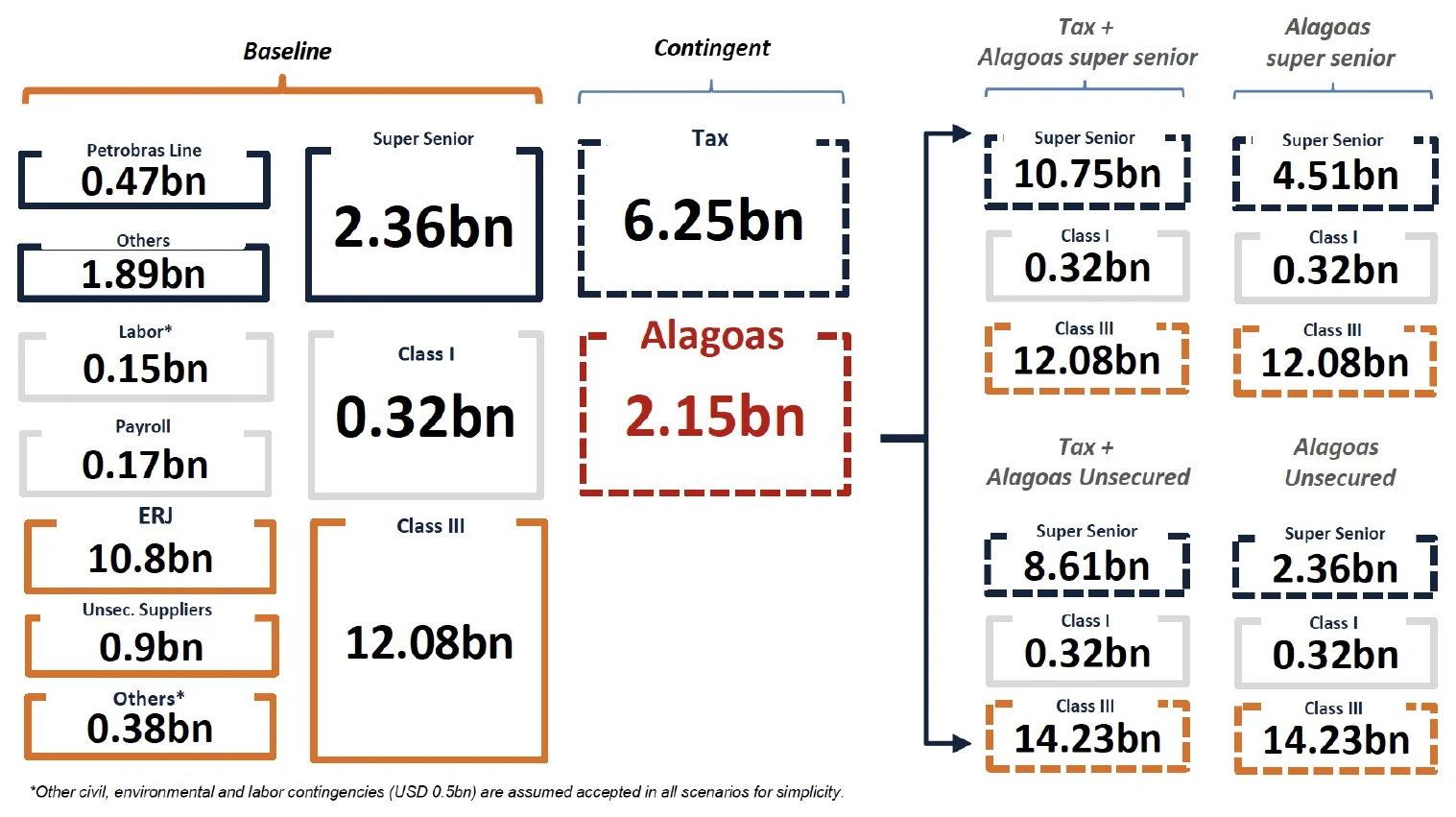
Tax disputes (USD6.25bn, ICMS/PIS-Cofins, 150% penalty) plus Maceió costs.
A full RJ could trigger USD2.1bn in Maceió contingencies and pull tax claims ahead of creditors—critical for creditor recovery.
Debt treatment can help but won’t do the job alone.
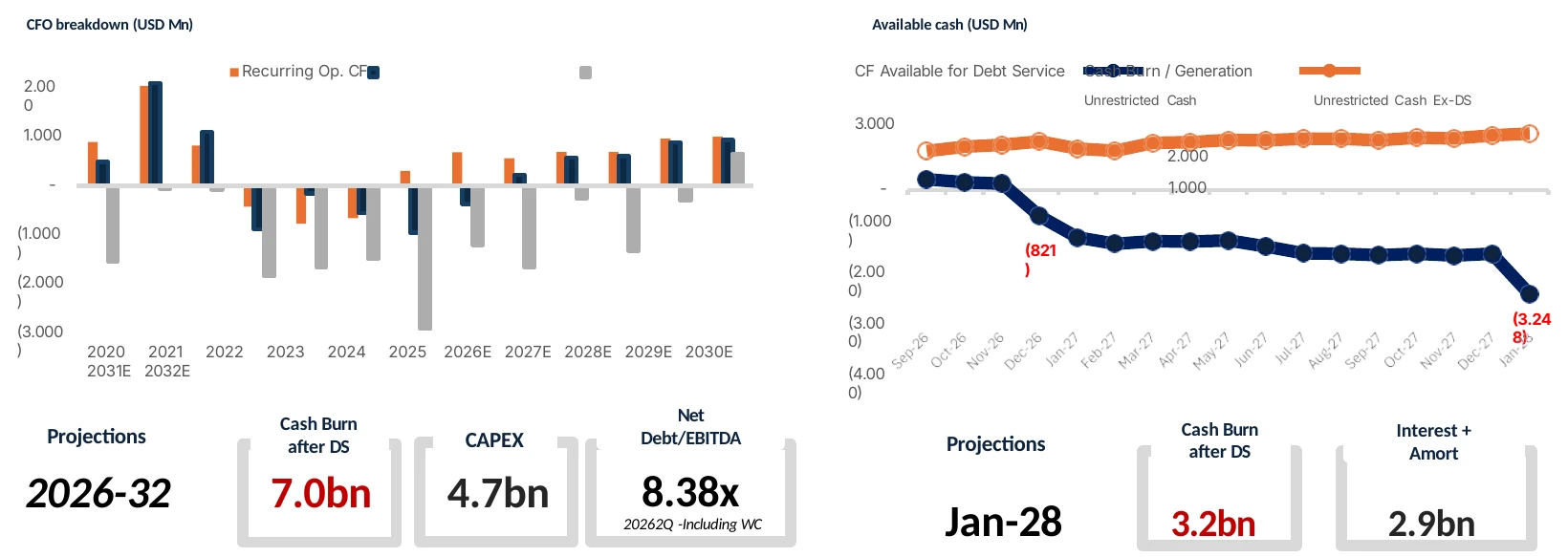
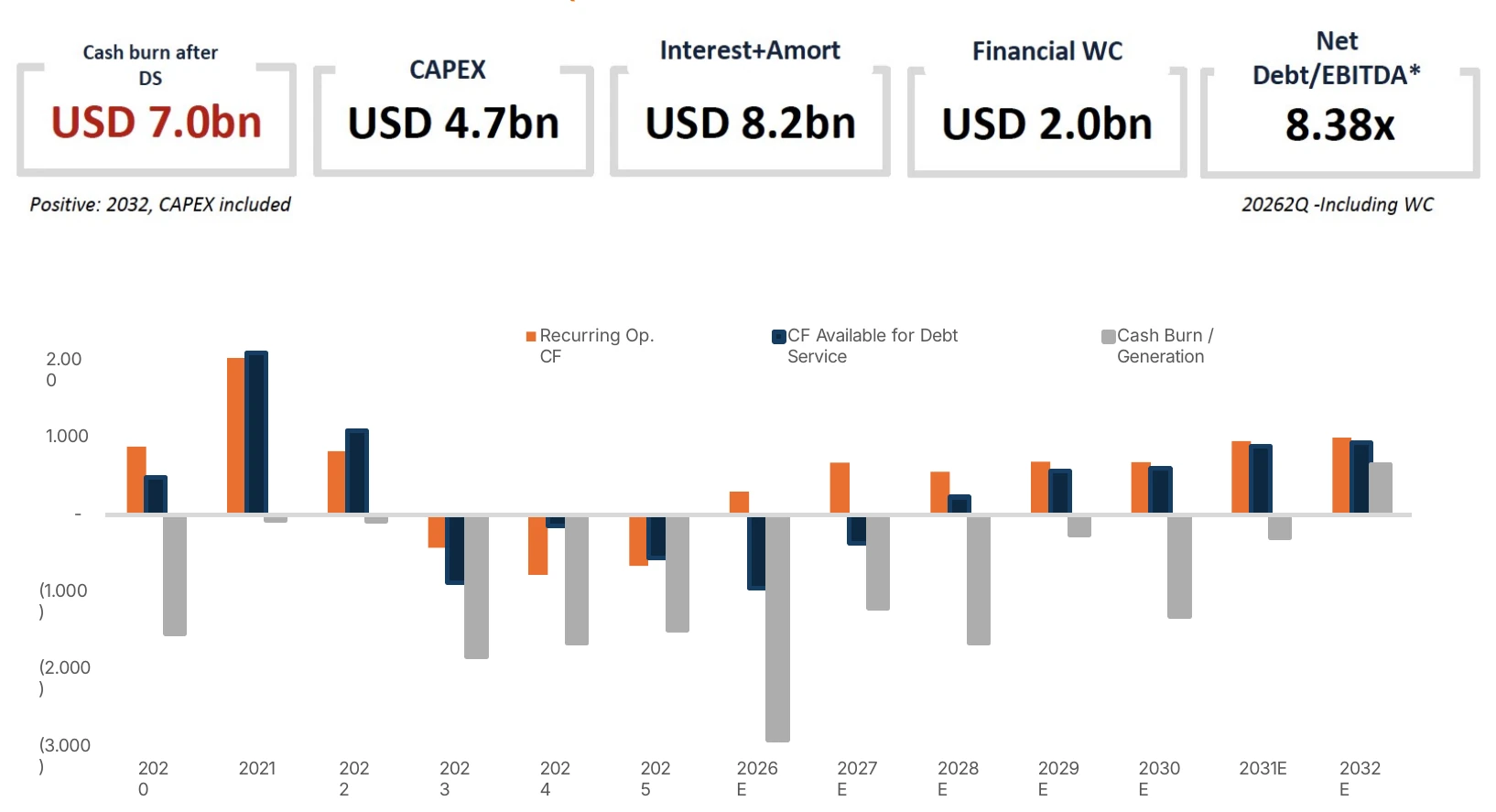
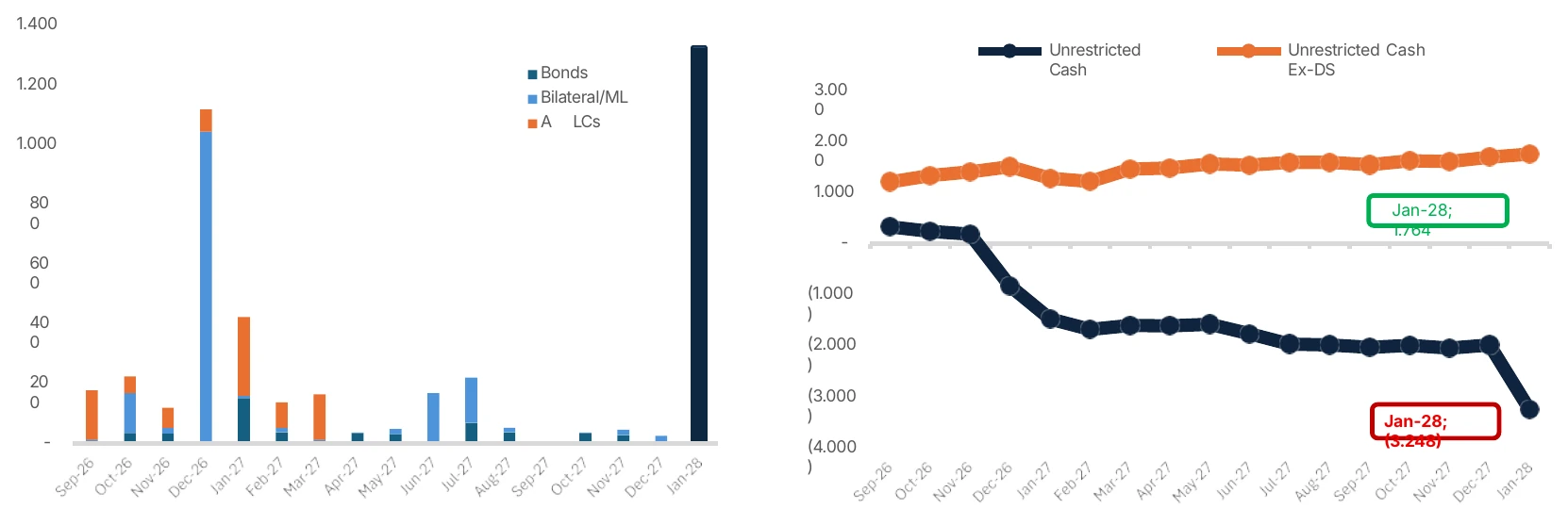
Since 2023, Braskem’s been burning cash even before debt service – and faces about USD 3bn of disbursements through December 2027 before the maturity of its USD 1.2bn 4.5% 28 in the following month.
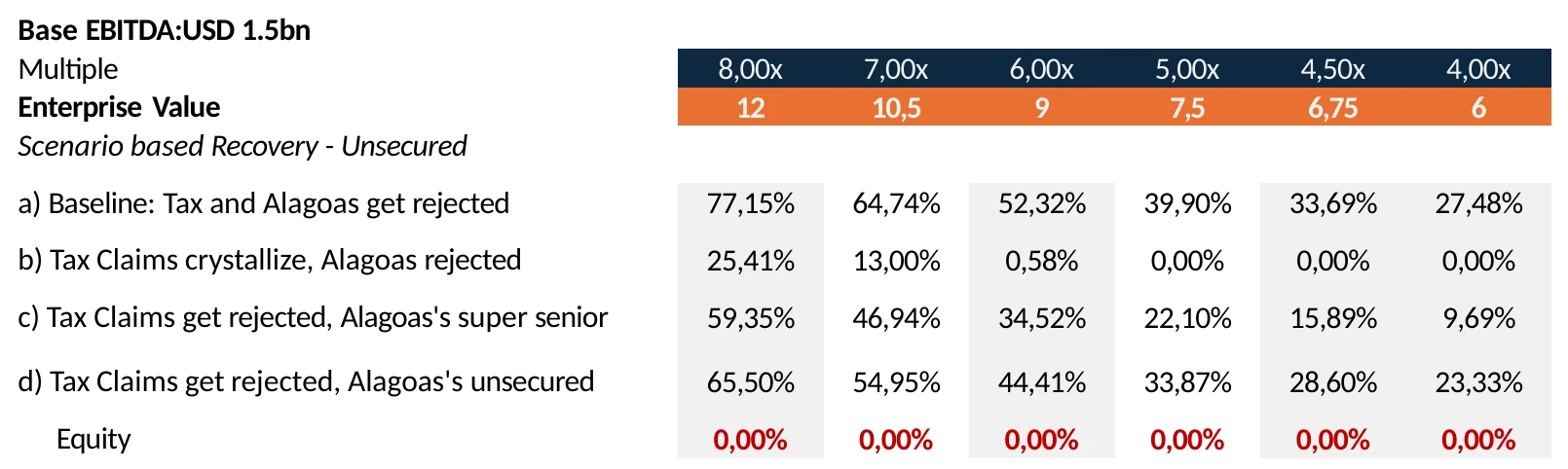
Assuming a running EBITDA of USD 1.5bn (2Q26: USD1.4bn), even a punitive 45% haircut—implied by current Eurobond prices—leaves leverage above 4x.
Problem’s not the debt stack alone…business been awful.
The game of chicken: Recuperação Judicial
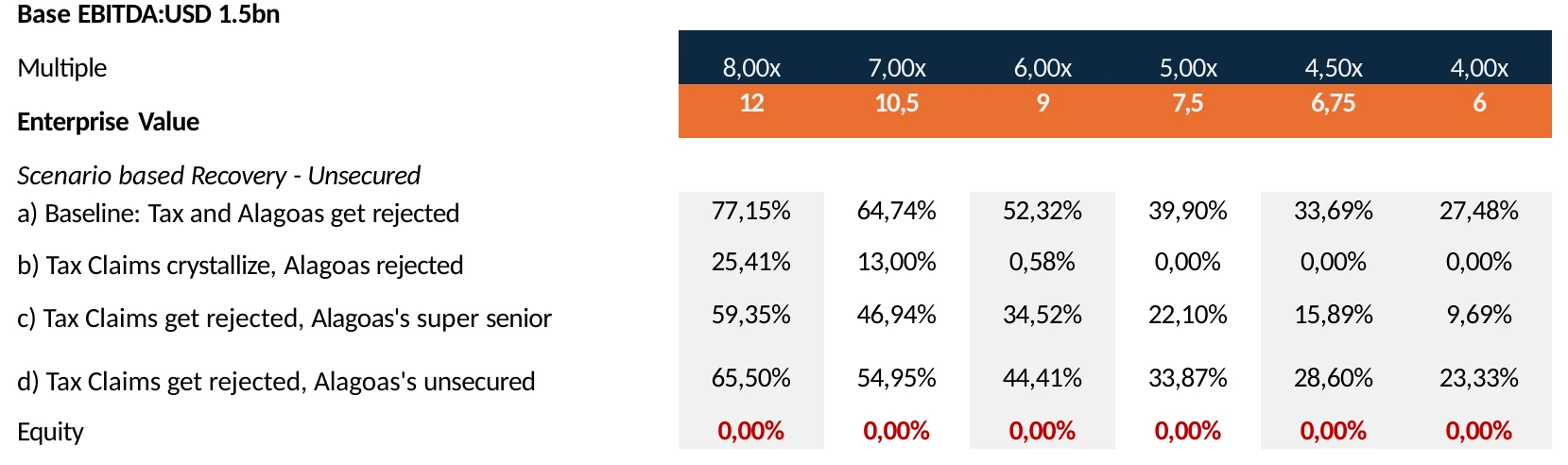
Both sides can threaten an RJ; neither wants one. At the market-implied 4x, bondholders recover at most 27,5 cents — nothing if tax claims crystallize — and equity is wiped out in every scenario.
That is what makes the threat credible, and why both sides keep negotiating.
The shareholders and its soap opera dynamics
Braskem’s been struggling for years. Why does the deal drag?
The answer: politics — and a quite controversial shareholder
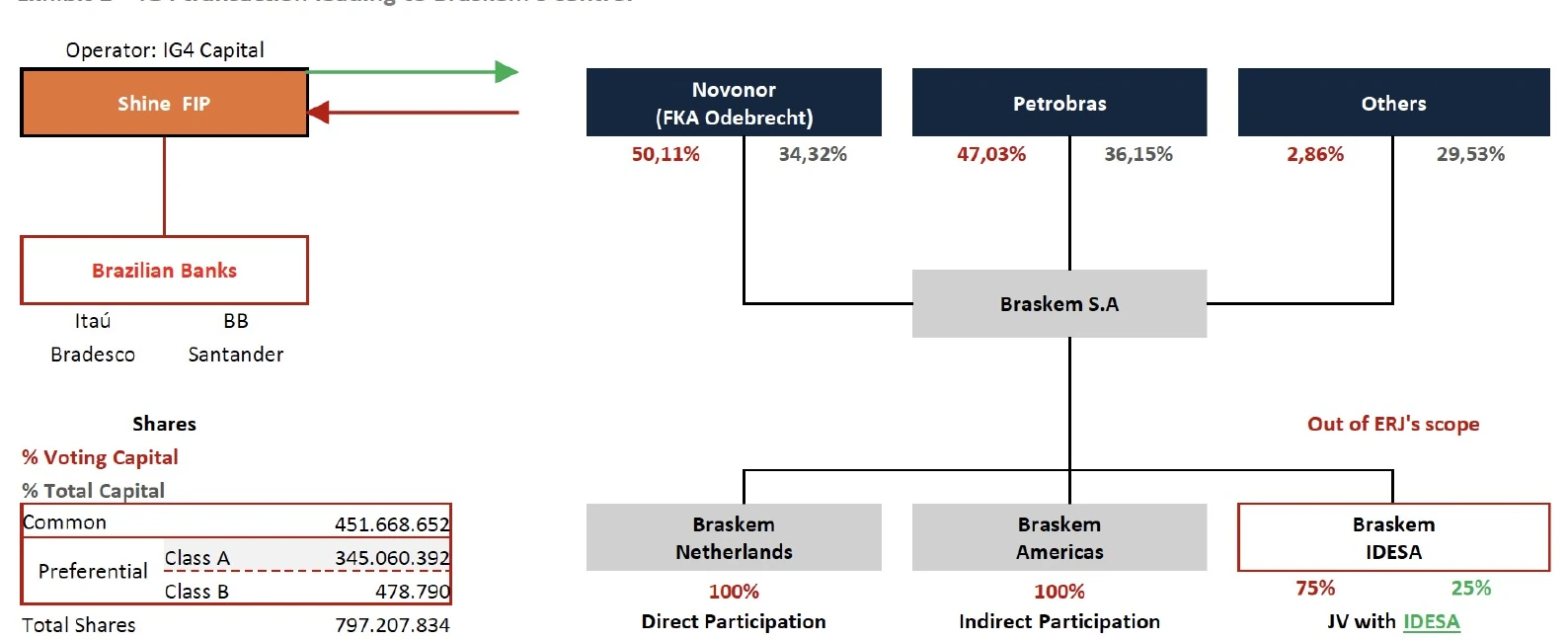
The paralysis: The controlling stake belonged to Odebrecht— a controversial brand in Brazil, epicentre of the Lava Jato scandal that reached across the entire political spectrum, including figures in the current administration.
Any resolution touching an Odebrecht-linked asset carried acute political cost, and no exposed actor — least of all a state-controlled Petrobras — wanted to be seen moving first. The process stalled for years.
Suitors came and went. And Petrobras has passed on every single proposal.

The Tell
Contingent liabilities are an impediment for many
LyondellBasell walked away in 2019 over the Alagoas liabilities; Nelson Tanure made resolving them a condition of any deal.
“A strategic asset»
For Petrobras, Braskem is a strategic asset — for reasons that are not strictly financial: It anchors the national petrochemical chain, secures downstream demand for feedstock, and serves an industrial-policy logic that a state-controlled company is expected to protect.
Petrobras’s commercial relationship with Braskem
Petrobras is Braskem’s dominant feedstock supplier. Braskem’s Brazilian operations consumed +/- 7.5mt of naphtha in 2025, of which Petrobras contracts to supply roughly 4.1mt in 2026, rising to 4.3mt by 2030, with the balance imported.
In December 2025 — months before the filing — the two signed USD 17.8bn in long-term feedstock contracts (USD 11.3bn naphtha, USD 5.6bn NGLs), running 5–11 years extending a relationship historically priced off the international ARA benchmark
Caveats on Petrobras acting directly…
Minority shareholders
Petrobras is listed in São Paulo and New York, with private investors holding the majority of its economic capital. Any capital injection into Braskem is a related-party transaction, open to challenge by minorities and scrutiny by the CVM and SEC.
Public oversight
As a state-controlled company, Petrobras is bound by the State-Owned Enterprises Law and answers to the TCU. Deploying capital into a distressed asset requires a defensible business rationale — «strategic» alone is not enough.
Consolidation
Taking sole control would bring +USD 10bn of Braskem debt plus the liabilities onto Petrobras’s balance sheet — a risk a Petrobras source explicitly cited as a reason not to go it alone.
But make no mistake: Petrobras holds the hammer – and Brasilia holds Petrobras
In our view, a capital injection into Braskem needs only a simple majority of Petrobras’s board — six votes, exactly the Brazilian Government’s seats. Petrobras’s CEO chairs Braskem’s board, and nothing passes there without Petrobras. The votes are there. So why hasn’t the Government acted?
Because 2026 is an election year — and a close one.
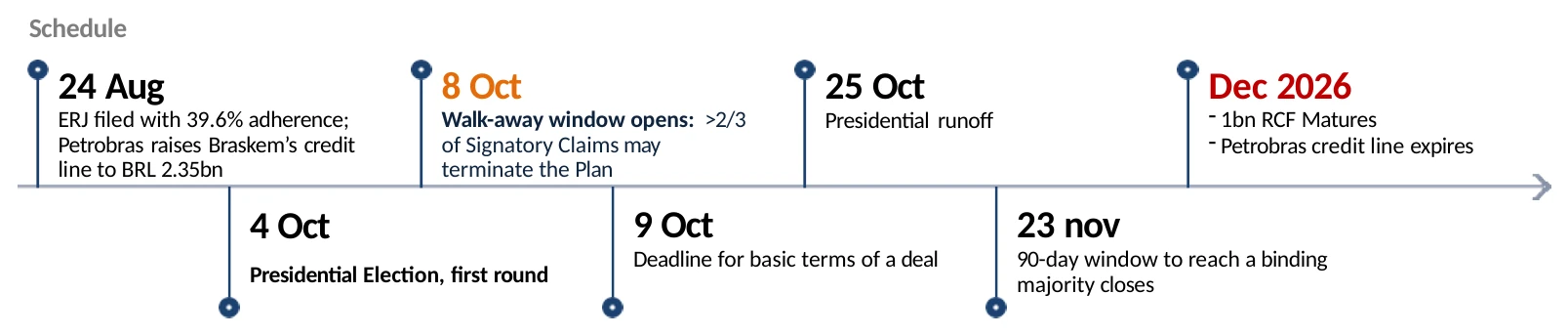
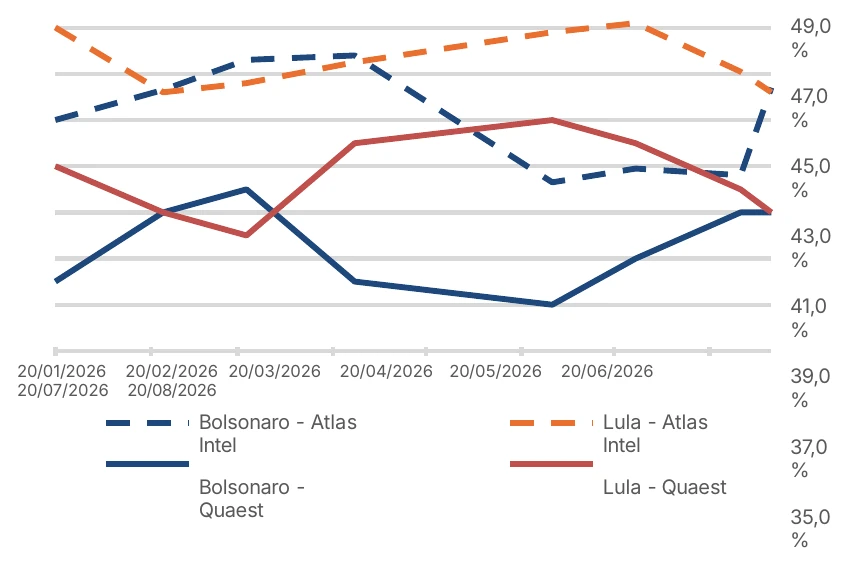
Lula and Flávio Bolsonaro are in a statistical dead heat ahead of the 4 October first round and a likely 25 October runoff — Quaest has Lula at 42% vs. 41%; AtlasIntel has Flávio at 47.2% vs. 46.8%.
A state-backed rescue of an Odebrecht-legacy asset is exactly the headline the opposition wants.
And the calendar compounds it: basic terms are due on 9 October, between the two rounds; the ERJ window closes in late November; Petrobras’s credit line expires on 31 December. Braskem’s proposals so far — a pure deferral-and-PIK plan in June, then one in which creditors fund their own haircut while shareholders put in nothing — are so far from anything creditors could accept that they read less like offers than like stalling.
How Braskem broke
The Petrochemical sector persistent downturn
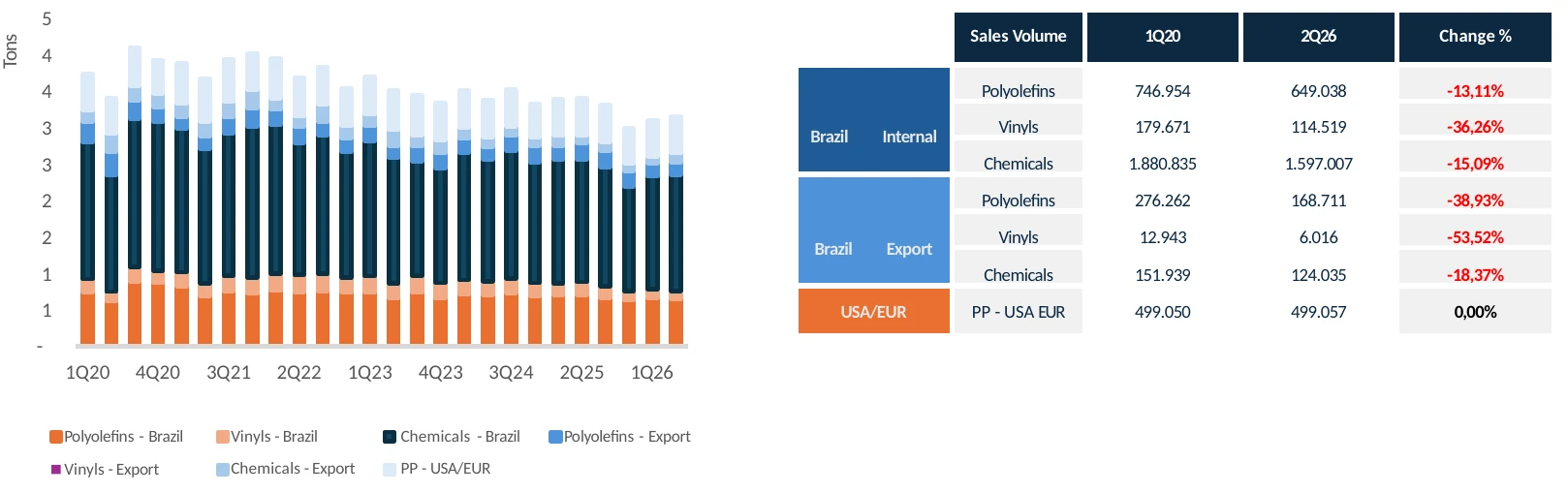
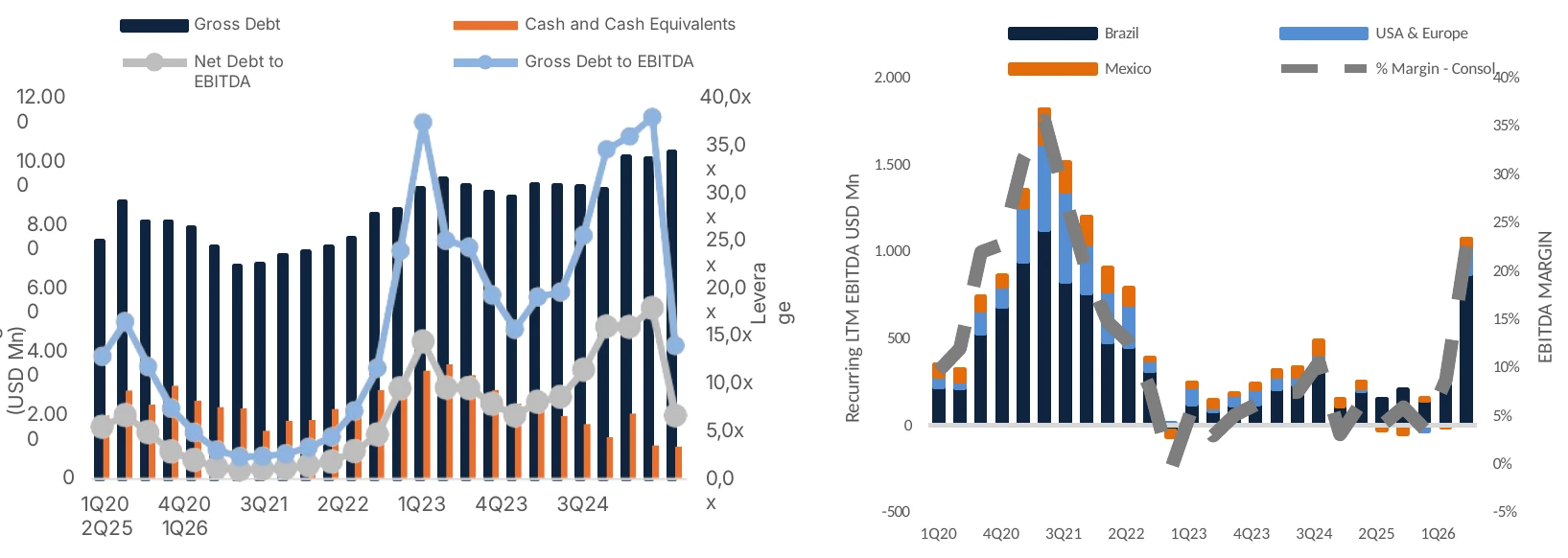
Braskem’s fortunes are tied above all to polyethylene (PE), its principal product. And PE sits in the middle of one of the deepest, most structural downturns the petrochemical industry has seen.
China, historically the buyer that soaked up global surplus, has not only stopped absorbing — it is now emerging as a net exporter in some products. Global ethylene plants run roughly at 80% utilization, and on an integrated basis, polyethylene cash margins have been largely negative since mid-2022 — the point at which the sector turned decisively against Braskem.
Braskem’s legacy liabilities
Beyond the balance sheet, Braskem carries a second, largely invisible liability stack. As of June 2026, it disclosed USD 6.9bn in contingent liabilities classified as possible losses excluding Alagoas.
Braskem vs The Federal Revenue Service
Disputes with the Receita Federal over tax credits Braskem offset in past years, including a 150% penalty assessed earlier this year on credits linked to a court-won exclusion of ICMS from the PIS/Cofins tax base.
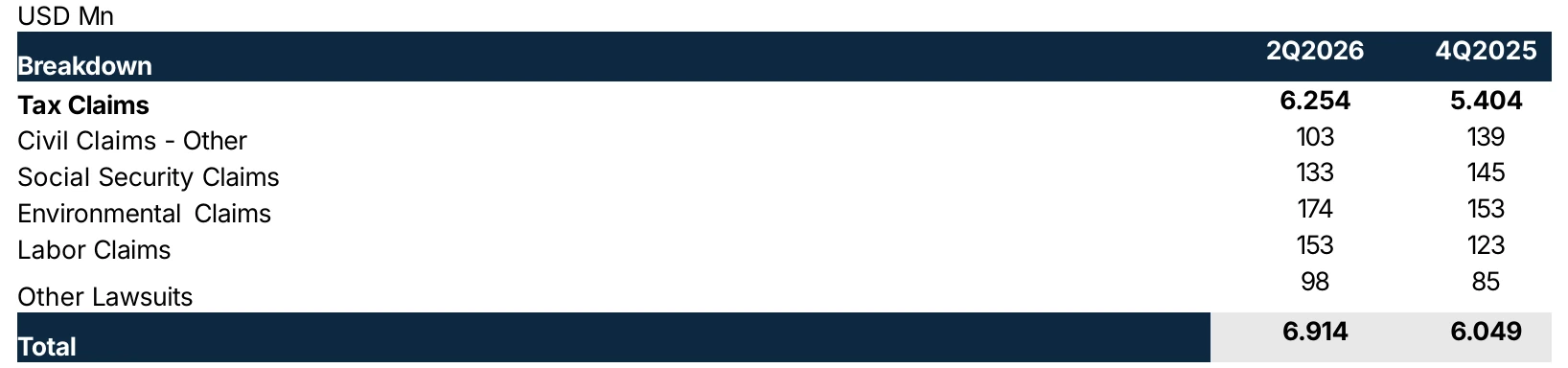
RISK: In a RJ, it moves to the front of the queue: tax claims sit outside the plan, labor claims rank ahead of unsecured creditors, and contingencies can be asserted as claims.
The Alagoas’ sinkhole — when the ground literally opened
For decades, Braskem mined rock salt beneath Maceió, capital of Alagoas — one of Brazil’s poorest states. In 2018 the caverns began to collapse: five districts became uninhabitable and 60,000 people were displaced, in one of Brazil’s largest urban environmental disasters.
Braskem has never admitted culpability but has paid regardless — over USD 800Mn disbursed to date under settlements ratified in 2019–2022, draining liquidity just as the cycle turned. The risk now is not what was paid, but what remains open.
Several lawsuits attack the settlements from different angles, with a single objective: to destabilize them. Meanwhile, a parallel action over denied housing insurance near the affected area could unlock a new wave of claims.
Struck in Alagoas, jurisdiction with an active public-defender apparatus, weak jurisprudence and an election year sharpening political incentives, these agreements are less final than they look.
RISK: Under social and political pressure, these claims could be recognized in an eventual RJ. Worse: Such claims can be treated as environmental and eventually, super senior to unsecured creditors (bondholders), reducing – or even wiping out Recovery for bondholders.
Braskem’s June proposal – Terms
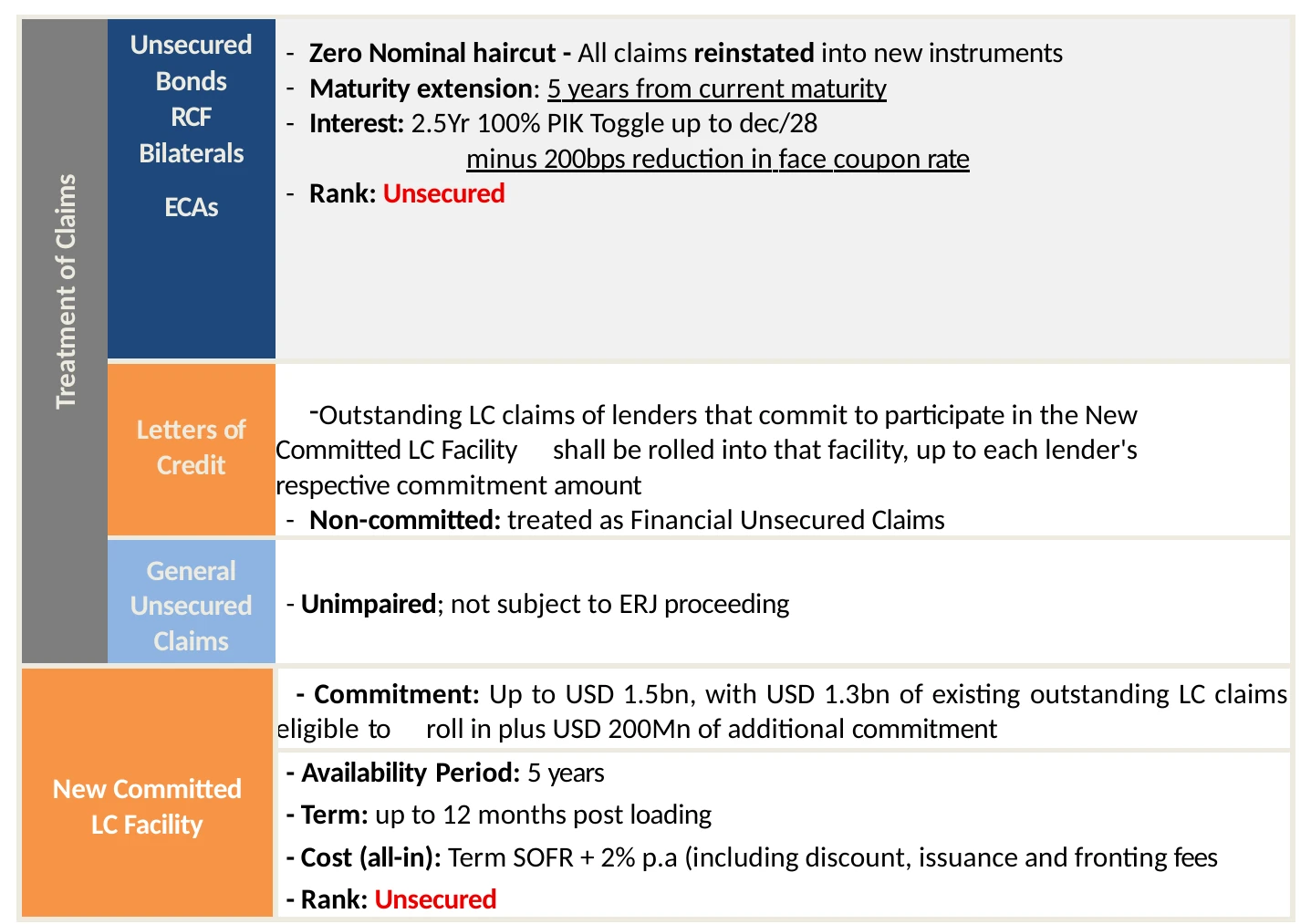
In June, Braskem offered creditors a deferral — a five-year extension with PIK interest and a coupon cut — while ruling out any haircut, new money from shareholders or security over assets. The Ad Hoc Group rejected it.
AHG response to Braskem’s proposal
The Ad Hoc Group rejected the June proposal as «wholly unsatisfactory«, singling out the coupon cut as unheard of in a corporate restructuring.
Any deal must involve meaningful contributions from shareholders and compensate creditors on a positive NPV basis — through higher coupons or collateral — with no extension beyond what liquidity requires.
Creditors remain open to a consensual «plan to a plan» process, but only with strict protections against value leakage. And they want Petrobras at the table, negotiating directly and in good faith.
Their price: a firm, legally enforceable USD 3bn commitment from Petrobras and IG4 over two years.
Our driver: De-risk reflected on the YTM
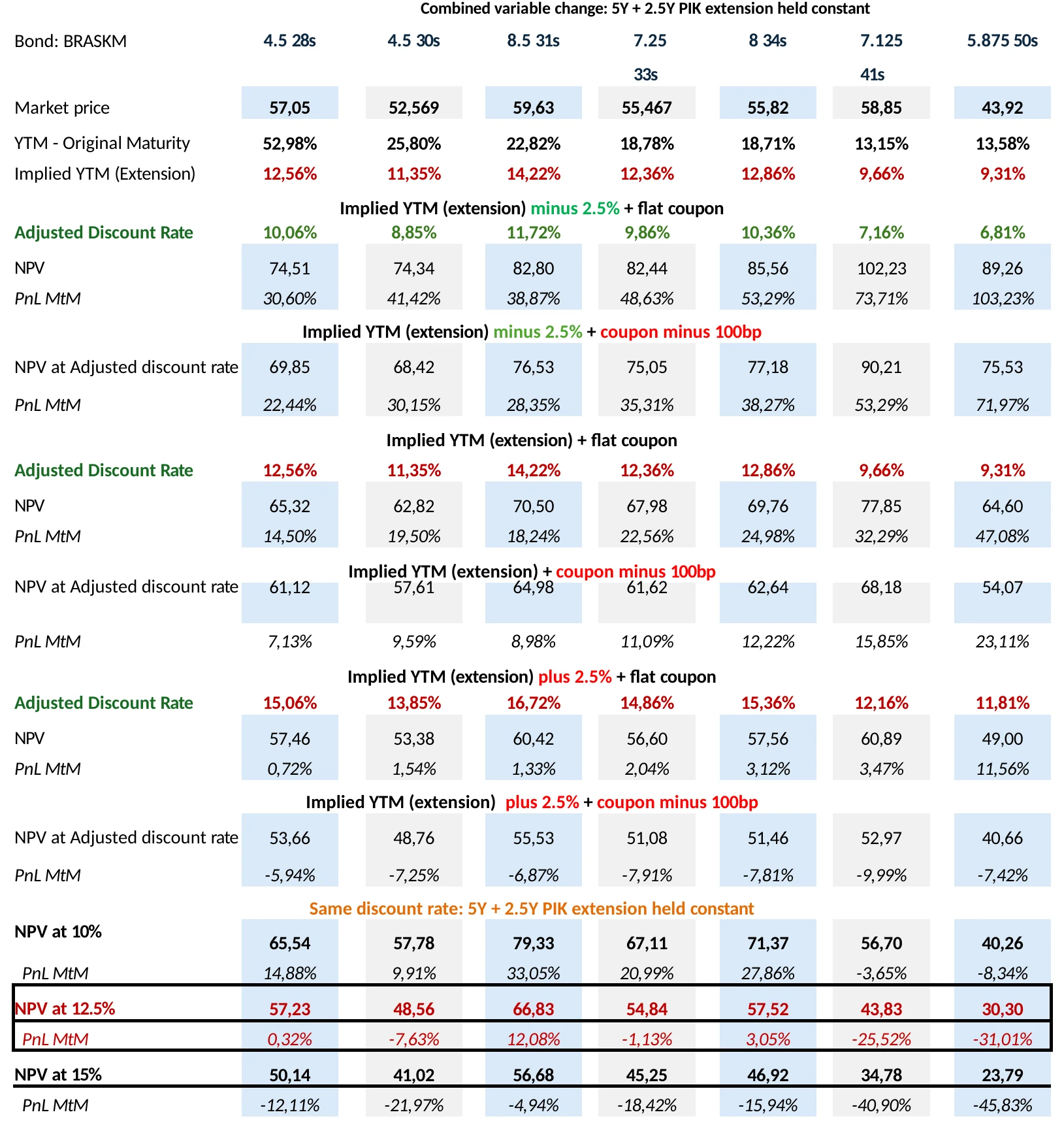
The structure is highly sensitive to the discount rate, and the PIK plus the longer duration amplify every point of de-risking. At a common 12.5% rate, the proposal values the 28s–34s at roughly their screen prices.
The long end is the exception: at the same discount rate, the 41s and 50s would be worth 25–31% below screen, suggesting the 50s trade partly on claim value, while the 41s the only US-issued bond, and one of the two issuers that lost the stay on 24 September.
Braskem’s June proposal – Cash Flow Analysis
It’s not (only) the debt – Business needs to recover
The consensus reading of Braskem is simple: an over-levered company that needs its debt cut. We think that diagnosis is incomplete. To test it, we strip Braskem’s cash flow back in three layers — first the business alone, before any interest or tax; then with the cost of its current capital structure; and finally on a standard free cash flow basis.
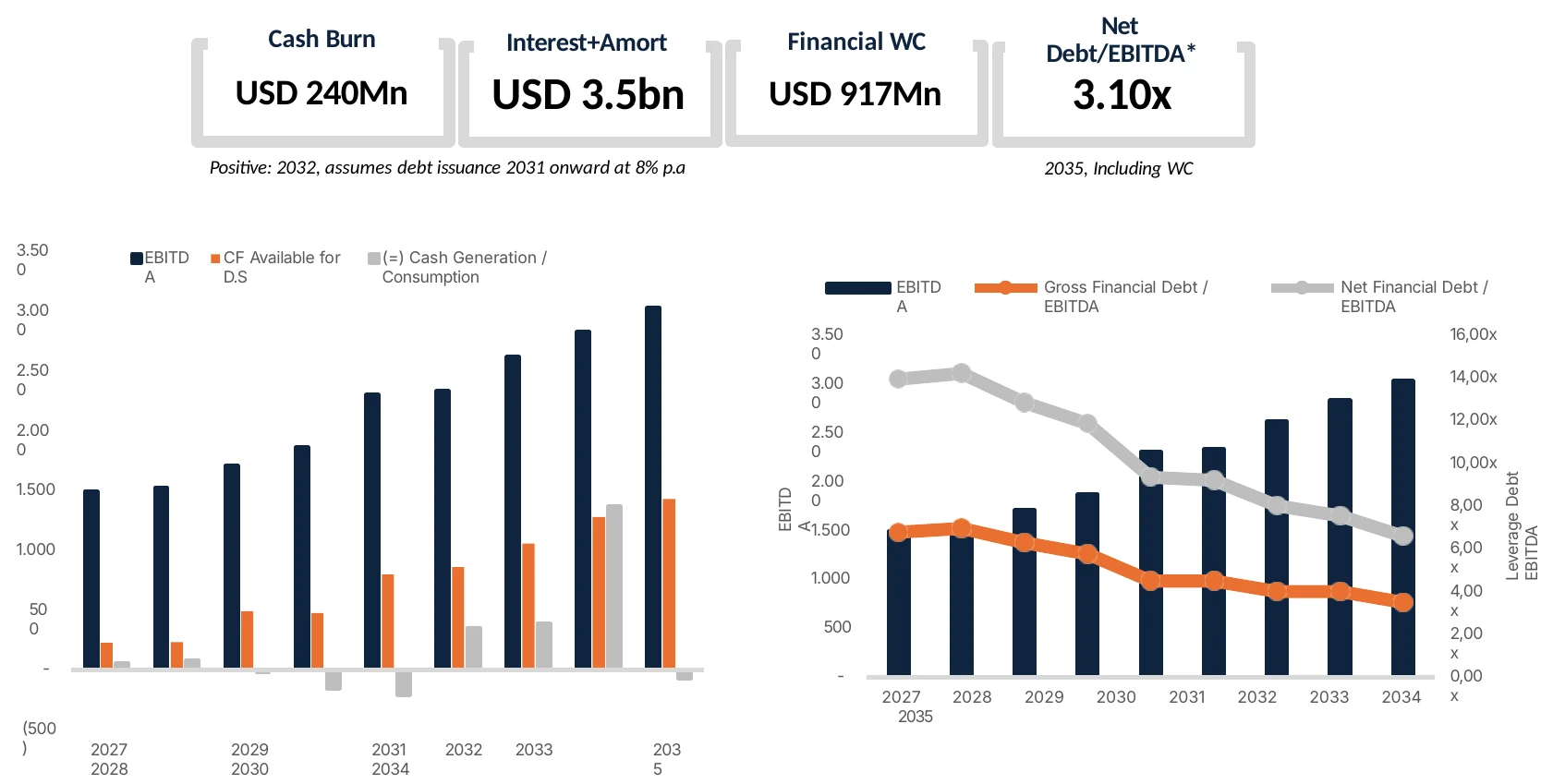
Braskem’s been burning cash alone and that changes what any restructuring has to solve — a haircut can lighten the balance sheet, but it cannot fix a business that loses money before paying a single real of interest. Braskem’s own projections, presented to creditors in June, make the point:
The business only turns cash-flow positive at the operating level from 2026 onward — and stays deeply negative after interest and amortization all the way to 2035. Management believes the cycle will turn and wants creditors to wait for it.
But what if it doesn’t? The proposal has no answer.
It defers, it doesn’t fix
The capital structure is pushed five years out, not resolved.
No new liquidity
Beyond PIK relief, the business might keep burning cash — and shareholders put in nothing.
No downside protection
No collateral, no covenants, no shareholder backstop.
A one-way transfer of value
Creditors fund the wait at below-market terms; equity keeps the entire upside.
Brazilian Law
What is a Recuperação extrajudicial, ERJ
Recuperação Extrajudicial is Brazil’s pre-packaged restructuring with similar logic as a pre-packaged Chapter 11, and with a comparable outcome: a court-sanctioned cramdown of holdouts without a full judicial proceeding.
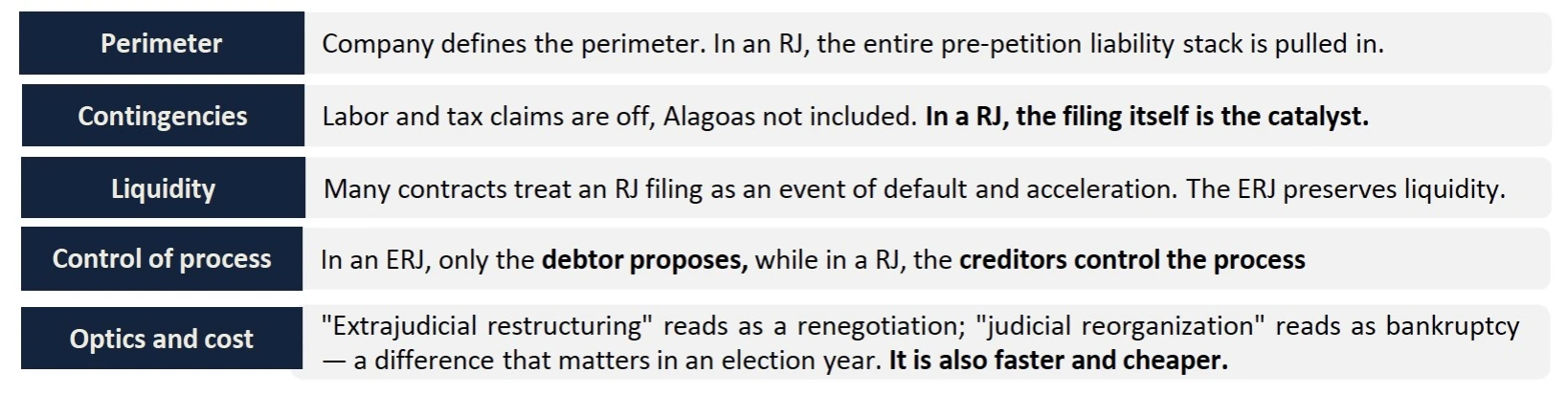
Why an ERJ – and not an RJ
It is the only route that addresses the financial creditors without opening every other front:
The plan: not having one
Braskem did not file a restructuring plan so much as a placeholder: the August filing sets out a standstill and negotiation framework
Full RJ – Where bondholders stand
In a full judicial reorganization, bondholders rank as Class III unsecured creditors. What they recover depends on two things: how much value reaches the class, and how many creditors share it.
Perimeter: From ERJ to RJ Pool
Waterfall recovery
Cross-border
NY-law bonds, Brazilian process
All Eurobonds sit inside the ERJ. They are governed by New York law, issued by Braskem Netherlands Finance and Braskem America Finance, and guaranteed by Braskem S.A. Their payment terms cannot be amended without each holder’s consent, so dissenters can only be bound by a Brazilian court-sanctioned plan that a US court then recognizes.
Braskem laid the groundwork early: it filed for Chapter 15 in New York on June 26 — two months before the ERJ — and obtained provisional relief, since extended. Recognition of the plan itself is set for a December 8 hearing.
US courts have recognized Brazilian reorganizations before, but recognition is not automatic — and it is weakest where the debtor’s center of main interests lies outside Brazil, as it arguably does for Dutch and US finance vehicles.
The court steps in
On 24 September, the São Paulo bankruptcy court issued a ruling that reshapes the ERJ — largely in creditors’ favor.*
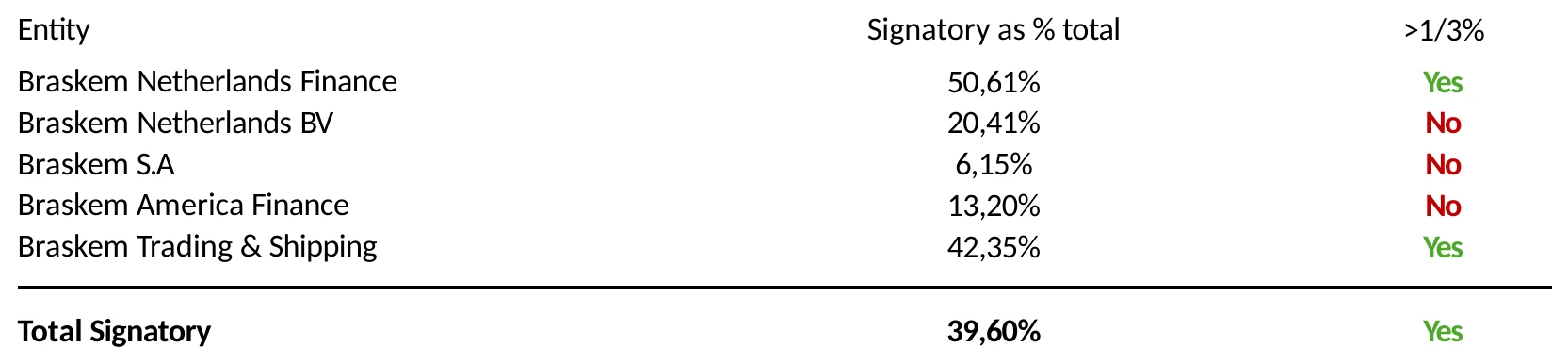
No aggregate quorum
Each debtor must reach one-third on its own. Braskem Netherlands B.V. (20,4%) and Braskem America Finance (13,2%) fell short and lost the stay.
Braskem Idesa frozen
About USD 800Mm of support to the Mexican subsidiary’s Chapter 11 suspended, pending proof of any return to Braskem.
NY-law bonds
Dissenters can only be bound by a plan recognized in the US (Chapter 15). For the 41s — US issuer, stay already lost — neither is a given.
*Source: 2nd Bankruptcy Court of São Paulo, decision of 24 Sep 2026; Braskem Material Fact, 25 Sep 2026.
Final comments
It takes two to tango — so far, only one side is on the dance floor
Braskem’s outcome will not be set by a spreadsheet but by two parties: bondholders and Petrobras — and, behind Petrobras, Brasília. Neither wants an RJ. At the market-implied 4x, unsecured recovery is at most 27.5 cents, and zero if tax claims crystallize; equity is wiped out in every scenario.
The threat is mutual, and that is what keeps both sides at the table.
The curve (43.9–59.6) is not pricing that tail. At current prices, the June proposal — reinstated at par, with a five-year extension, PIK and a 200bp coupon cut — implies a 9–14% yield.
That level is consistent with a negotiated deal, not with a court-led one.
From here, value sits in the terms, not in the structure. Each 100bp of coupon recovered is worth roughly 4–10 points (7–23% of price); restoring the original coupon at the same yield is worth 14–47%. The market can take it back just as quickly: 2.5 points of wider spread largely erase that gain, and with a 100bp cut the bonds lose 6–10%.
The long end is a different story. Discounted at the same 12.5% as the rest of the curve, the proposal is worth 44 for the 41s and 30 for the 50s — 25–31% below screen. In our view, the market is pricing the claim more than those cash flows: in a negotiated exchange, every bond typically counts as a par claim regardless of maturity — which is why the curve trades in a tight 44–60 band from 2028 to 2050. Claim value is not the whole story, though — the 15-point gap between the 41s and 50s could be an indication the market still discriminates by coupon and issuer.
The 24 September ruling has already shifted leverage toward creditors: per-debtor quorums, two entities without a stay, and the Idesa support frozen.
Creditors have named their price: USD 3bn in firm shareholder support. Petrobras has not answered.
Complexity is where we begin.
CONTACT
Francesco Marani – Head trader
fmarani@caledonia.es
Javier Garcia – Sales Trader
jgarcia@caledonia.es
Rubens Bozano – Special Situations Analyst
rbozano@caledonia.es
Disclaimer
This publication has been approved by Caledonia Sociedad de Valores (“Caledonia”). It is provided to our clients for information purposes only and Caledonia makes no express or implied warranties and expressly disclaims all warranties of merchantability or fitness for a particular purpose or use with respect to any data included in this publication.
The views in this publication are those of the author(s) and are subject to change and Caledonia has no obligation to update its opinions or the information in this publication. If this publication contains recommendations, those recommendations reflect solely and exclusively those of the authoring analyst(s) and such opinions were prepared independently of any other interests, including those of Caledonia.
This publication does not constitute personal investment advice or consider the individual financial circumstances or objectives of the clients who receive it. The securities discussed herein may not be suitable for all investors.
Caledonia recommends that investors independently evaluate each issuer, security or instrument discussed herein and consult any independent advisors if they believe necessary. The value of and income from any investment may fluctuate from day to day because of changes in relevant economic markets (including changes in market liquidity). The information herein is not intended to predict actual results, which may differ substantially from those reflected.
Past performance is not necessarily indicative of future results.
Caledonia Sociedad de Valores, S.A. is authorised and registered with the Comisión Nacional del Mercado de Valores (CNMV) under number 322. Registered office: Calle Serrano 21, 28001 Madrid, Spain.